P.O.P. - Positively About Poland
Poland seen from a distance
When I was living abroad permanently and only came back to Poland every now and then, I started to notice something interesting. I could see how many great things this country has. Infrastructure, nature, food, people — seriously, we have things to be proud of. And probably because I was looking at Poland from a distance, I could see it more clearly than when I was living there every day.
But I noticed something else too — when I talked with people, the conversations mainly revolved around what wasn’t working. Politics, roads, prices, neighbours. Complaining. As if all the positives disappeared the moment we opened our mouths.
And recently, riding a train from Warsaw, I thought — what if we started talking about Poland in a good light? Not forced, not performative — just genuinely. Because there’s plenty to talk about.
What complaining does to the brain
Before I get to the positives, I need to tell you about something that genuinely surprised me. It turns out that complaining isn’t just unpleasant — it literally changes the brain. And not for the better.
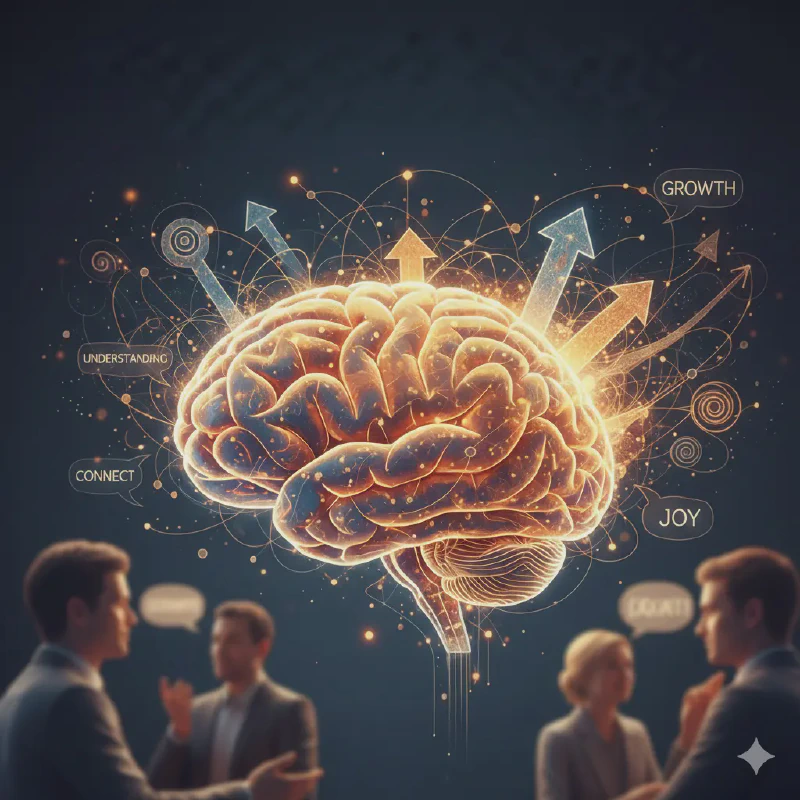
Research from Stanford University suggests that regular complaining — or even just listening to it for more than 30 minutes — can physically damage the brain. The hippocampus shrinks — the area responsible for memory and problem-solving. Chronic stress raises cortisol levels and the prefrontal cortex, the part of the brain responsible for logical thinking, simply shuts down.
And the worst part? The more you talk about negatives, the more easily your brain will spot them in the future. Neurons that fire together wire together — Hebb’s law. So complaining literally trains the brain to look for more reasons to complain. A vicious cycle.
What if we flip that 180 degrees?
Here’s where it gets most interesting. Because if negative conversations damage the brain, positive ones build it. And this isn’t any “just think positive and everything will be fine” — there’s solid research behind it.
When we talk about what’s good in Poland — that we have excellent engineers, that our nature is unique, that Polish cuisine is more than just a pork cutlet — our brain treats it as a form of gratitude. Research by Robert Emmons and the Greater Good Science Center at UC Berkeley shows that this kind of narrative increases grey matter density in the left prefrontal cortex — where positive emotions reside. Dopamine is released and the brain starts searching for more positives in its surroundings. Exactly the opposite of what happens with complaining.
There’s something else too — attachment theory suggests that talking about positive aspects of one’s country activates brain structures responsible for social belonging. The sense of belonging to a group — national, local, or any other — reduces amygdala activity. Which means less anxiety and more emotional stability.
And finally — collective pride. Research by Dr. Christian von Scheve on social psychology suggests that when we talk about Poland’s successes, neural synchronisation occurs in the brains of those in the conversation. We feel stronger as a community, and this translates into greater psychological resilience for each of us. So yes — talking about good things literally makes us stronger.
Beautiful Poland
And most importantly — when I thought about this new series, I didn’t have to force myself to think of article ideas. Because there’s plenty to write about. Topics come on their own, one after another, and I have a feeling that the more I think positively about Poland, the more topics I see. Hebb’s law seems to work in the other direction too.
That’s why starting today, the blog gets a new category: POP - Positively About Poland. You can filter the site by three categories:
- POP — positively about Poland
- technologia — technology
- podróże — travel
And I promise I’ll keep looking for those positives and sharing them with you. Because maybe if we start speaking well of Poland, we’ll eventually realise it’s even better than we thought.
Bibliography
See other articles in the same category
Join the nomAId journey

Subscribe to stay up to date.