There Were Supposed to Be Beautiful Photos and All That.
There were supposed to be beautiful photos and all that…
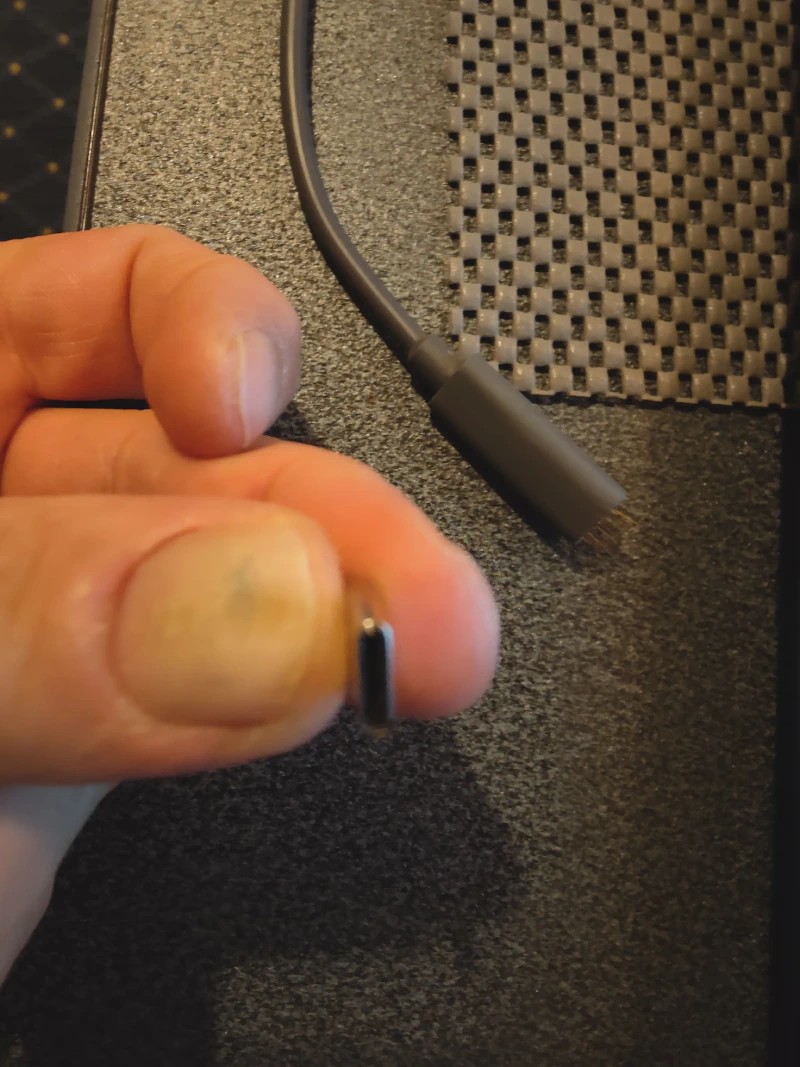
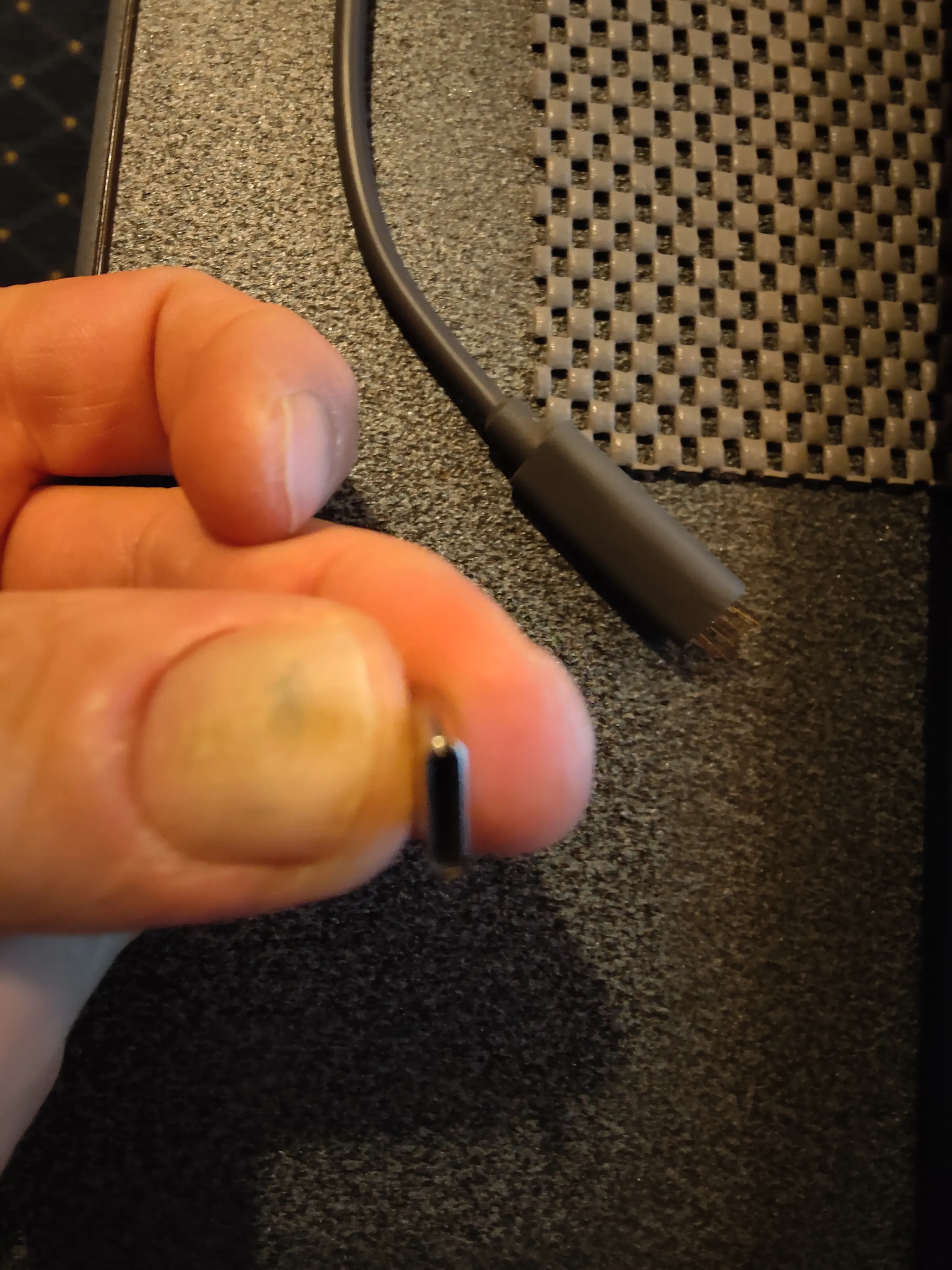
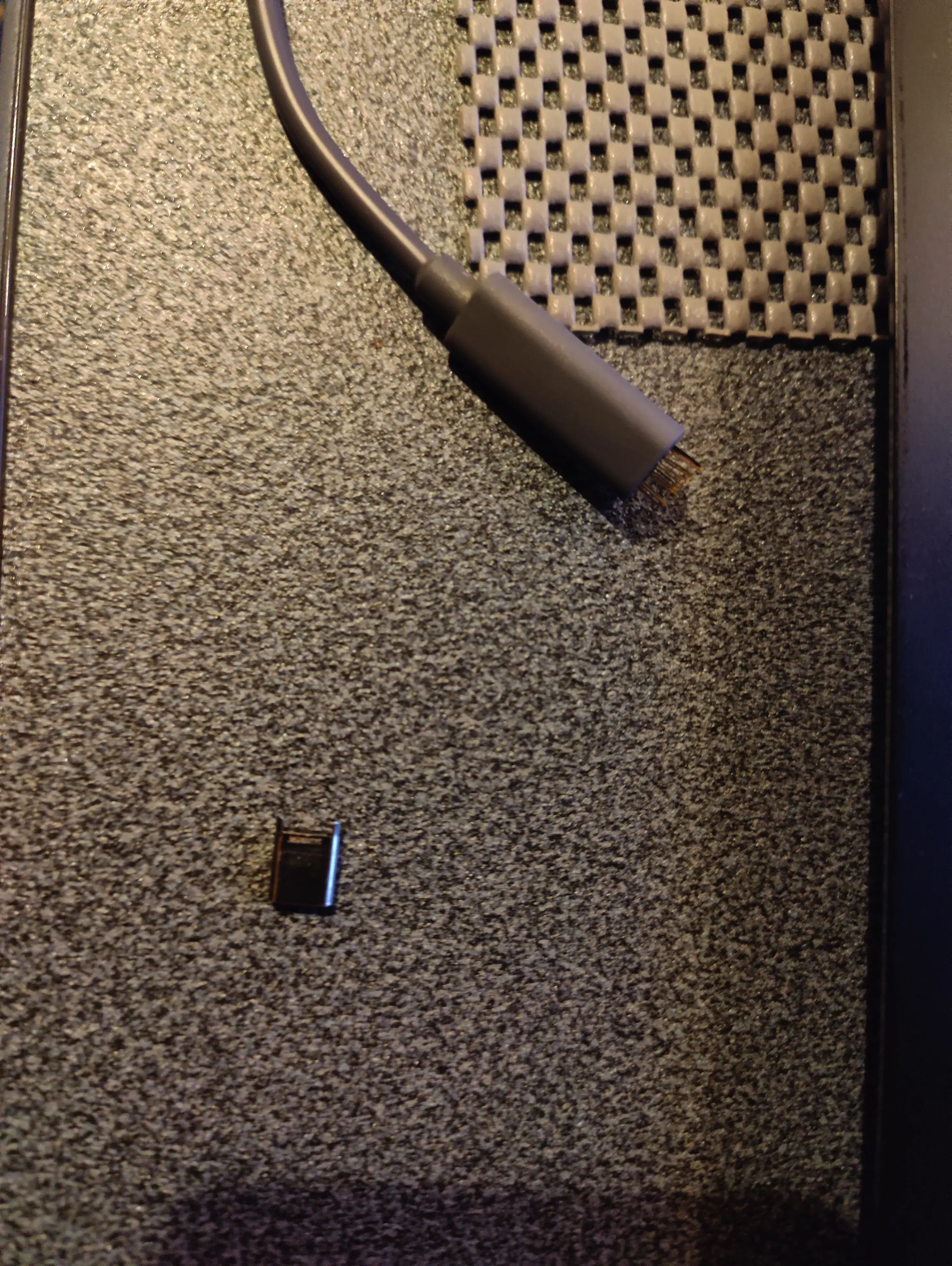
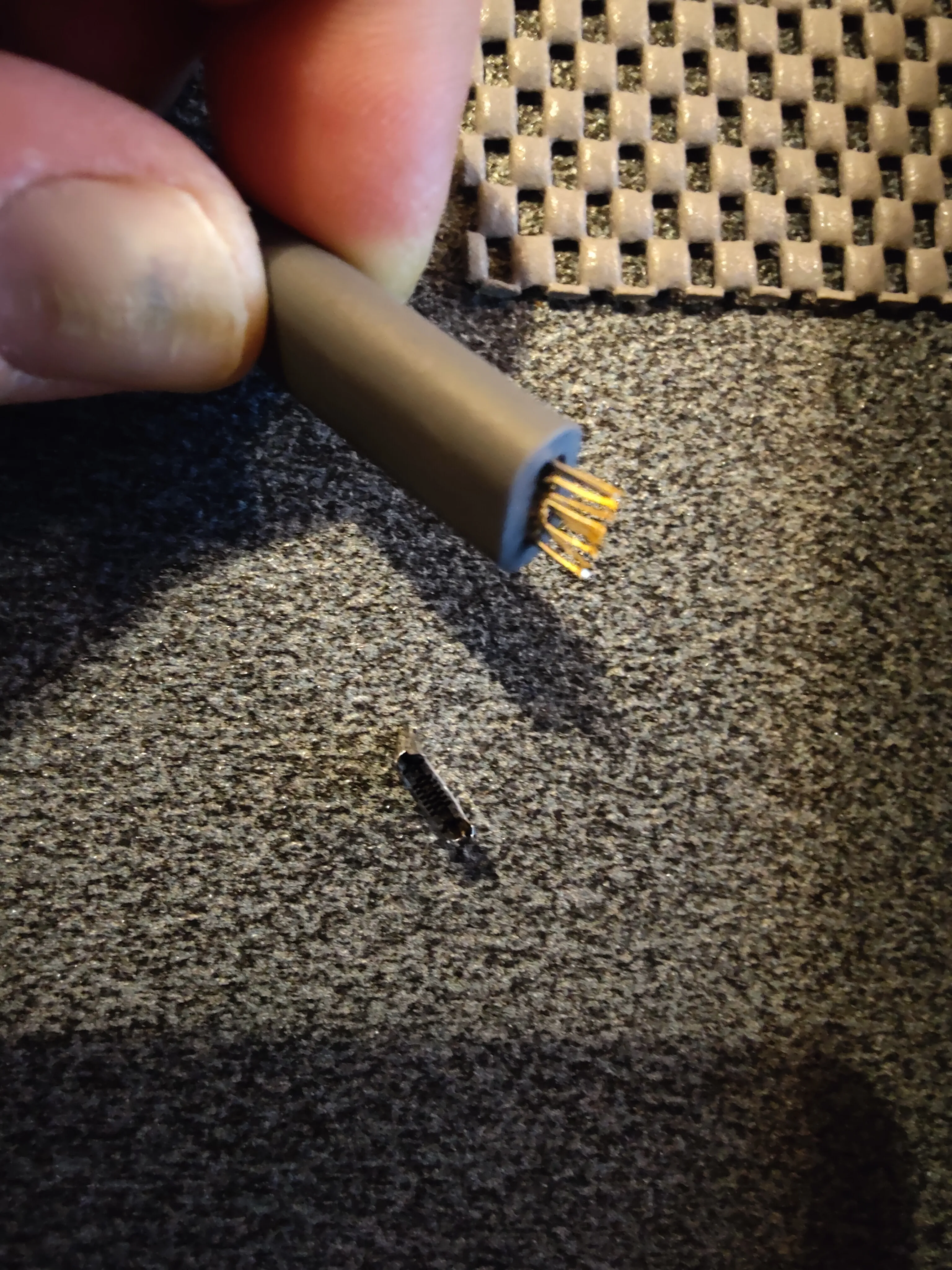
but I plug in the Starlink, look at the connector, something looks odd, look closer — what the heck? The connector is broken. Without overthinking it, feeling pretty pleased with myself thinking “aren’t I great for bringing some spare cables,” I grab a thicker wire — because Starlink does need a bit of power — cut one end, cut the other, join the wires, and… nothing. Life checked my self-congratulation — turns out it doesn’t work that way, because Starlink has the USB-C pins arranged completely differently from any other cable. Weak cables, honestly. Looks so solid, but it’s rubbish. Nothing to do. Ordered one on Amazon — riding on the phone hotspot until tomorrow.
So let me write a bit about Starlink.
Overall Starlink delivers — during the first week when I was basically driving, eating and sleeping all day long, Starlink worked the whole way and all night without a problem. I had internet radio going the entire time and only in a longer tunnel did it start cutting out. In terms of the internet from Starlink, I have absolutely zero reason to complain. I give lectures for uni, write the blog, upload videos, download photos — everything works at a sufficient level. Not like at home, obviously, but also not in a way where you have to start a download and then go make lunch while it loads.
The downside of Starlink is power consumption. Small device, but power-hungry. And while driving it was fine — maybe except that time I stopped in Germany and it was -8°C and Starlink switched on snow melting and ate half the battery overnight. Otherwise the challenges started when I wanted to stay put for longer. Not that I was surprised — after all, I specifically went back to Poland to have extra solar panels installed, which I didn’t end up mounting because temperatures were already too low. I had factored this in anyway and had a contingency plan: if needed, I’d buy a power station and a foldable solar panel.
Getting back to Starlink — it uses between 10 and 40 watts, with the app reporting an average of 25. This is the Starlink Mobile — the smallest, least power-hungry model. 25W isn’t a huge amount, but if it’s running almost continuously and the batteries aren’t recharging from the sun, it becomes a problem.
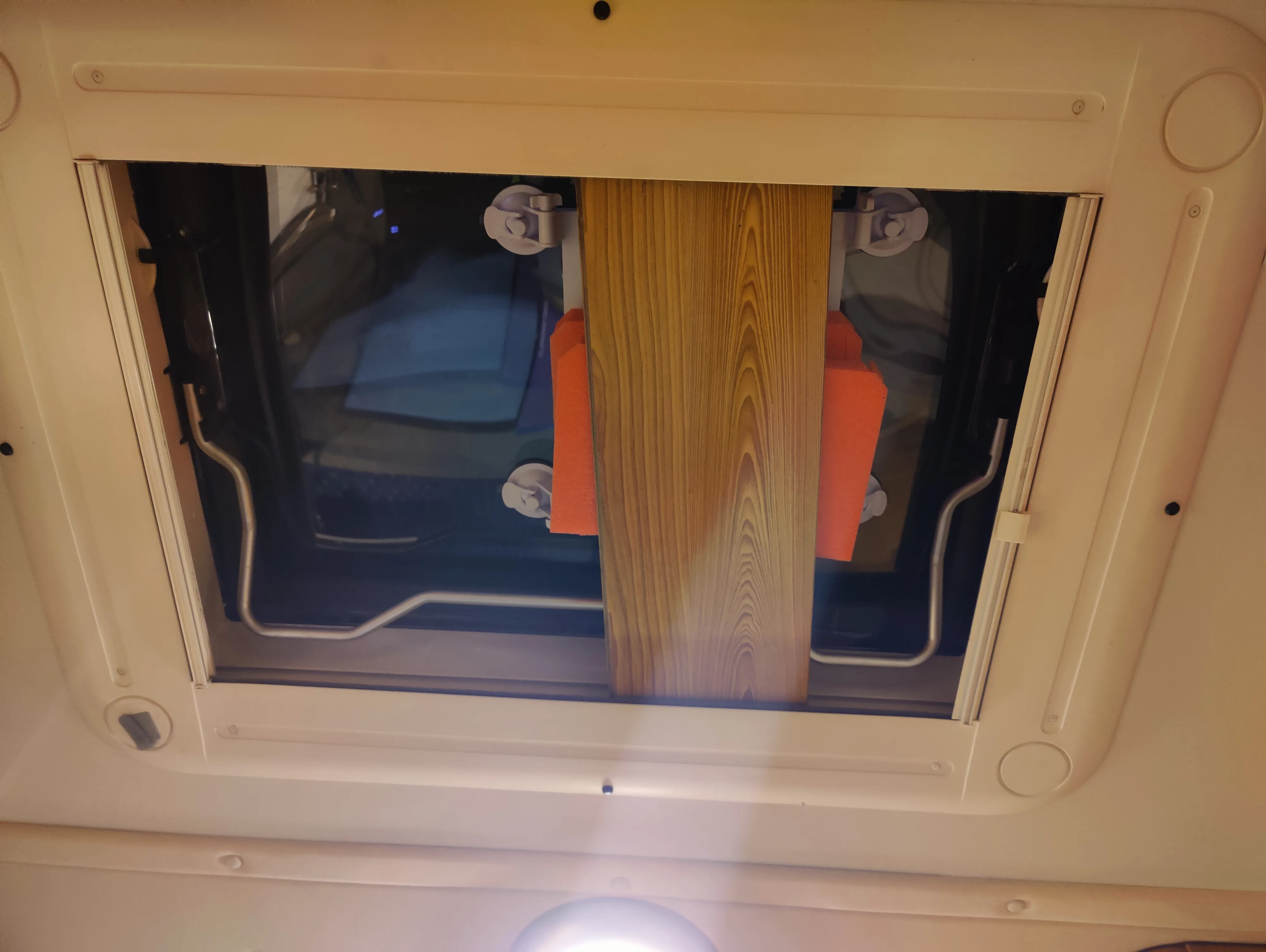
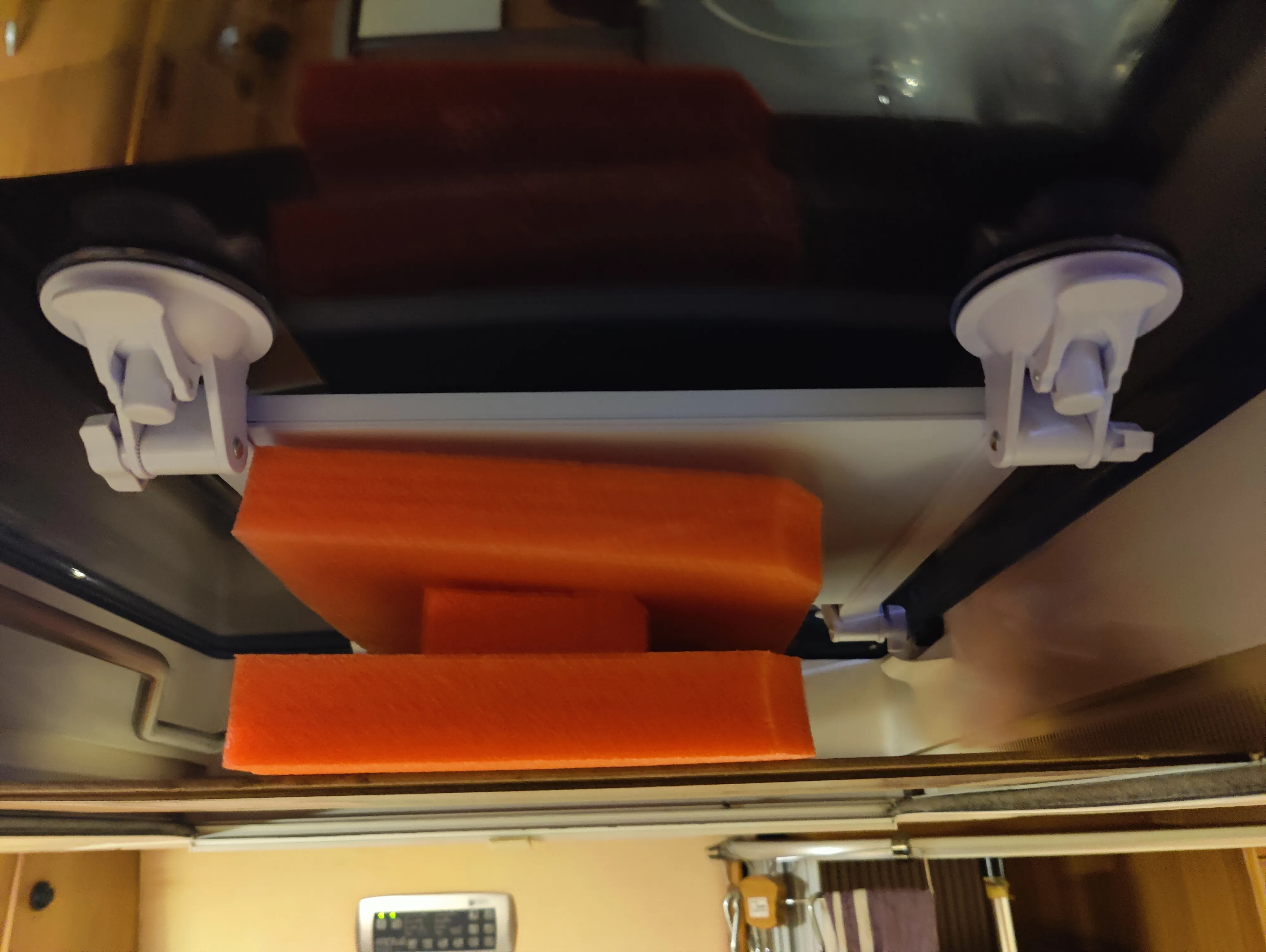
Continuing on Starlink — due to the temperature I didn’t stick it to the roof of the campervan, but I found a suction-cup mount for the skylight window on the inside. It does the job; I added some extra security at the bottom since suction cups can be hit or miss. What’s more, Starlink works with an app — in the smartphone app you set the Wi-Fi name and password, can check speed, connection status, and obstructions. The app lets you disable snow melting and set a sleep schedule — the device then goes into power-saving mode. The app also allows subscription management and access to the Starlink store. Unfortunately, there’s another downside here — because I registered in the Netherlands, I couldn’t make purchases in the store with delivery to Poland. That kind of setup requires changing the account country, which requires cancelling the subscription and setting it up again in a different country.
Overall rating: 6/10:
- speed — ok
- internet availability — excellent
- price — could be cheaper
- installation — ok
- Wi-Fi — excellent
- power draw — could be less
- cable quality — rubbish :)
- access to parts and mounts outside the official store — very good
- management app — ok
- minus for no option to ship to a country other than the account country
If I only had mobile internet with data limits at home, I’d consider Musk’s service or wait for Amazon to develop their competing service.
While I’m at it, let me talk about the energy situation.
The first longer stop I made was in France. Nice spot, lovely beach, still a bit cold — but I wanted to rest from driving, and Zora even more so. At the parking area I could empty the tanks and refill with fresh water, though I don’t really need to worry too much about that — without going into detail, it lasts me about a week. The bottleneck from the start was the battery, or rather the lack of charging while stationary. The solar panel on the roof is old and only 50 watts, so realistically it puts out maybe 30 — and only for a few hours a day due to the flat mount angle.
So in France I managed to stay for a whole two days. Literally 47 hours. It’s not just the Starlink draining the battery — there’s also the laptop, heating, and lighting. When it all adds up, after two days it was time to move. Move to the next spot, with the mission of buying a power station and panel. And here I miscalculated a bit — when I left I assumed, how hard could it be — parcel lockers, pickup points, MediaMarkts — all across Europe.
From the start I was keen on power stations and panels from Bluetti. A European product, store with delivery across Europe. Products available in every shop — even Leroy has them. One downside: all shops just act as intermediaries, Bluetti ships the products themselves and there’s no option to ship to a store. Fortunately, the market doesn’t end with Bluetti, but unfortunately power stations involve batteries and there’s apparently some regulation around that — no company ships to a parcel locker and very few stores allow in-store pickup. And when I did find something, they either only had the panel or only the station. Eventually I found a store — PC Components — that had both products with in-store pickup available. And I even caught a Black Week promotion.
What did I end up buying?
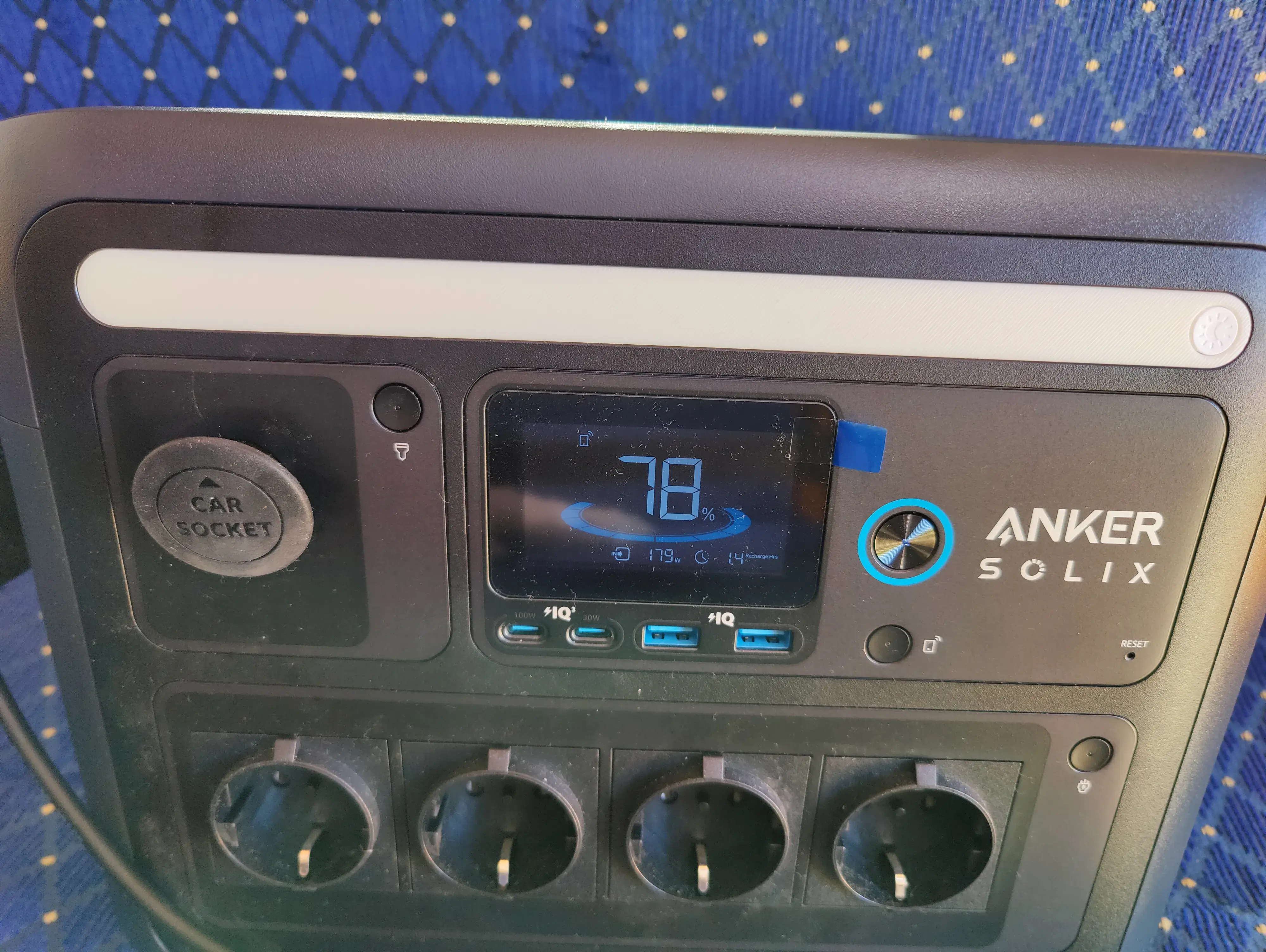
Power station — Anker Solix C1000 — 1056 Wh, car socket, 2 USB-C outputs, 2 USB outputs, 4 AC outputs, charging from panels up to 600W, fast AC charging, and 12V charging from the car lighter.
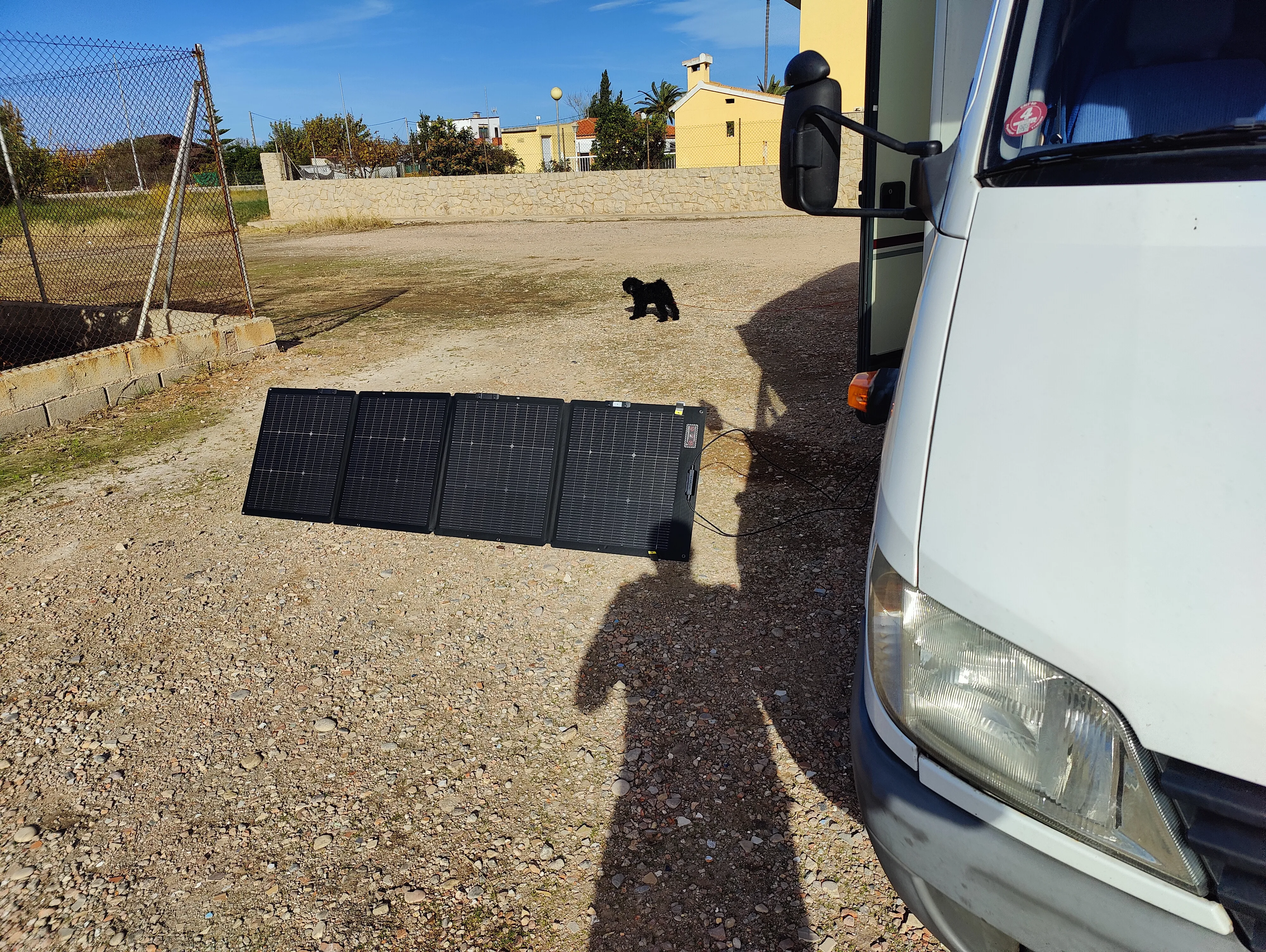
Solar panel — EcoFlow 220W, waterproof, foldable into 4 sections, weight 9kg, size folded approx. 0.5m × 0.6m.
Does it work?
Absolutely. The panel gave me a maximum of 180W, usually around 170. Today will be the fifth night I’ve stayed in one place and I’m loving it. I still have water reserves, the toilet is getting full but I have the black tank as backup. And energy? Well, after sunset my power station powers Starlink and the laptop and the lowest the battery has dropped is 70%. The next day the panel powered my laptop, Starlink, and charged the Solix. When the house batteries aren’t loaded with the laptop and Musk’s internet, they show they can last 10 days during the day and 5 days at night (with heating on — temperatures drop to 10°C at night).
So it’s brilliant, and I was just about to write about finally catching up on my uni lectures and being able to upload some travel photos to the blog — but that unfortunate cable gave out and it turned into a completely different story.
Finally, the ending
I was going to move on tomorrow anyway, because there are still a few kilometres to Malaga, and everywhere is beautiful and you want to stay. I could have ordered the cable to an Amazon locker, so I set up pickup 100 km further along — so tomorrow, back on the road. And those photos — the nice ones with the beach and the sea — I’ll post those once I have Starlink back, because uploading on LTE is just too slow. For now, some relevant ones below in the gallery.
Adios!
Gallery.
See other articles in the same category
Join the nomAId journey

Subscribe to stay up to date.